"Ashish is creative, smart, and FUN to work with. He is always willing to do whatever it takes to get the job done under tight time constraints. His ability to think outside the box adds tremendous value."

I redesign UX and run experience audits for B2B hospitality and equipment platforms - rebuilding navigation, journeys and product presentation around the way real buyers actually evaluate and purchase.
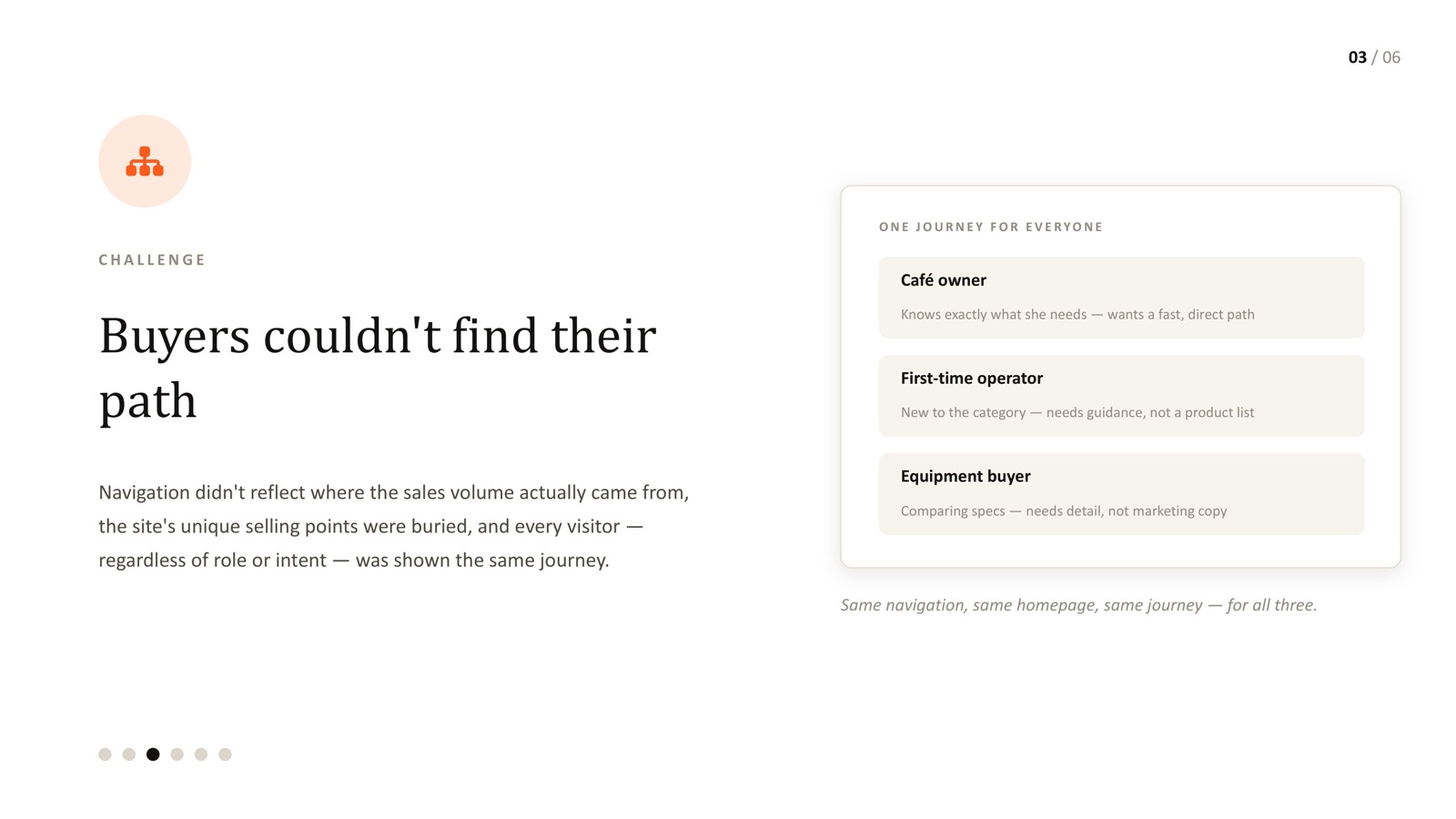
The old site showed every visitor the same journey, regardless of who they were or what they needed. Here's what changed when the redesign was built around each buyer instead.
Knows exactly what she needs.
Buried in the same generic navigation as everyone else, with no fast path to the specific product she already had in mind.
A direct, low-friction path from search to product - because she doesn't need convincing, she needs speed.
New to the category entirely.
Dropped straight into a product list with no context, expected to already know what "commercial-grade" or "GN pan compatible" means.
A guided flow that explains the category before it asks for a decision - built for someone who needs orientation, not options.
Comparing specs across vendors.
Thin marketing copy where detailed specifications should have been - forcing buyers to request a PDF or call in.
Detail-first product pages built for side-by-side comparison, because that's literally how this buyer decides.
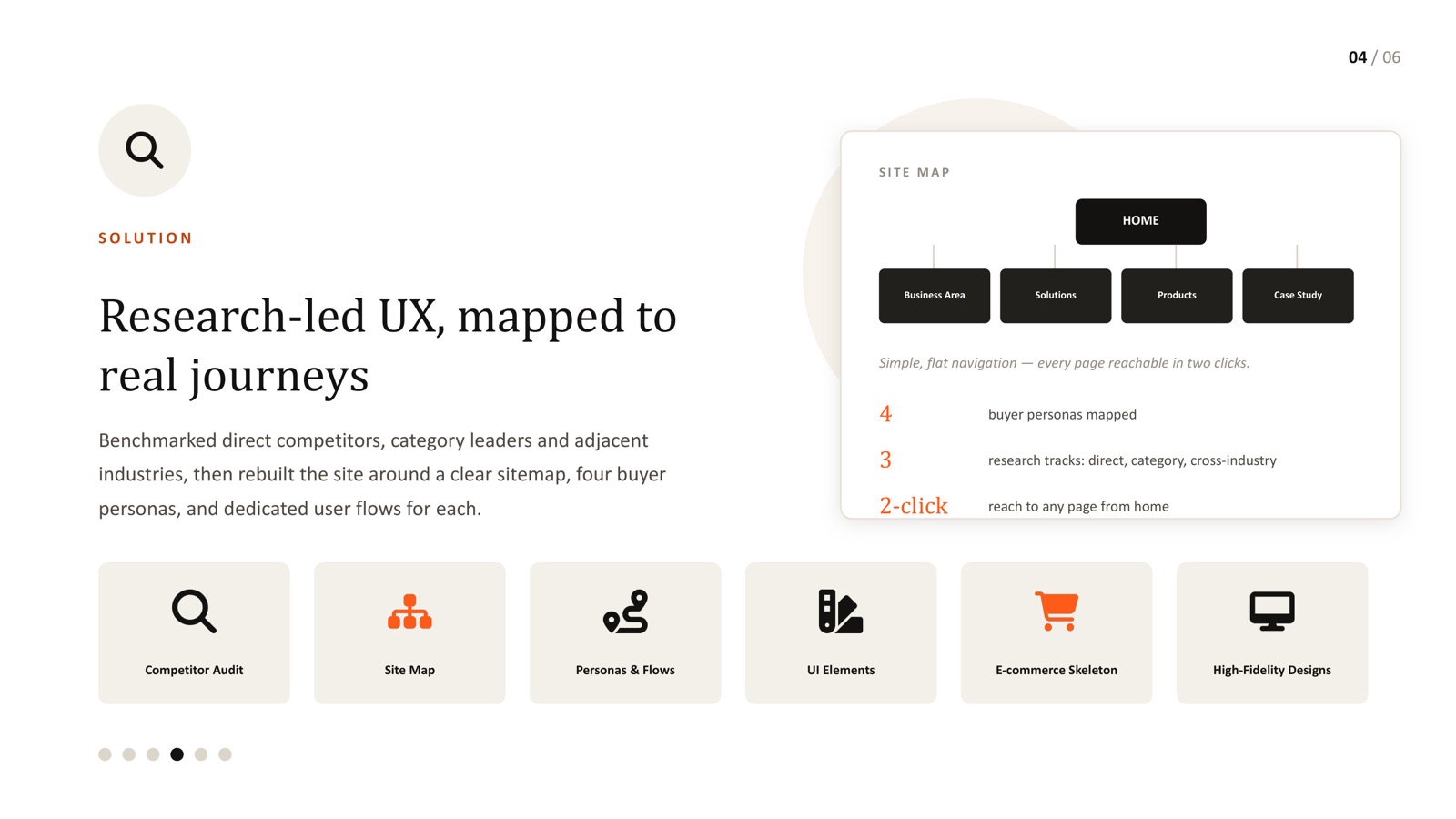
A flat sitemap with a mega-menu structure - every page reachable in two clicks from home, for all three buyers.
Heuristic evaluation, journey analysis and competitor benchmarking to find exactly where buyers drop off.
Rebuilding information architecture, navigation and product presentation around real buyer personas.
Positioning and visual identity work so the brand feels as credible as the products it sells.
Consistent components across a large catalog, so every product page holds the same quality bar.
WCAG-informed design so procurement teams evaluating accessibility compliance aren't blocked at review.
Stakeholder alignment across sales, marketing and product on what the redesign needs to achieve.

B2B buyers aren't consumers - they evaluate differently, in groups, over longer cycles. Every redesign starts with research across three tracks, not a designer's opinion of "best practice."
How the closest alternatives structure navigation, pricing and product presentation.
What the best-in-class players in adjacent B2B categories get right that this site doesn't.
Patterns borrowed from outside the category entirely, where relevant to how these buyers actually shop.
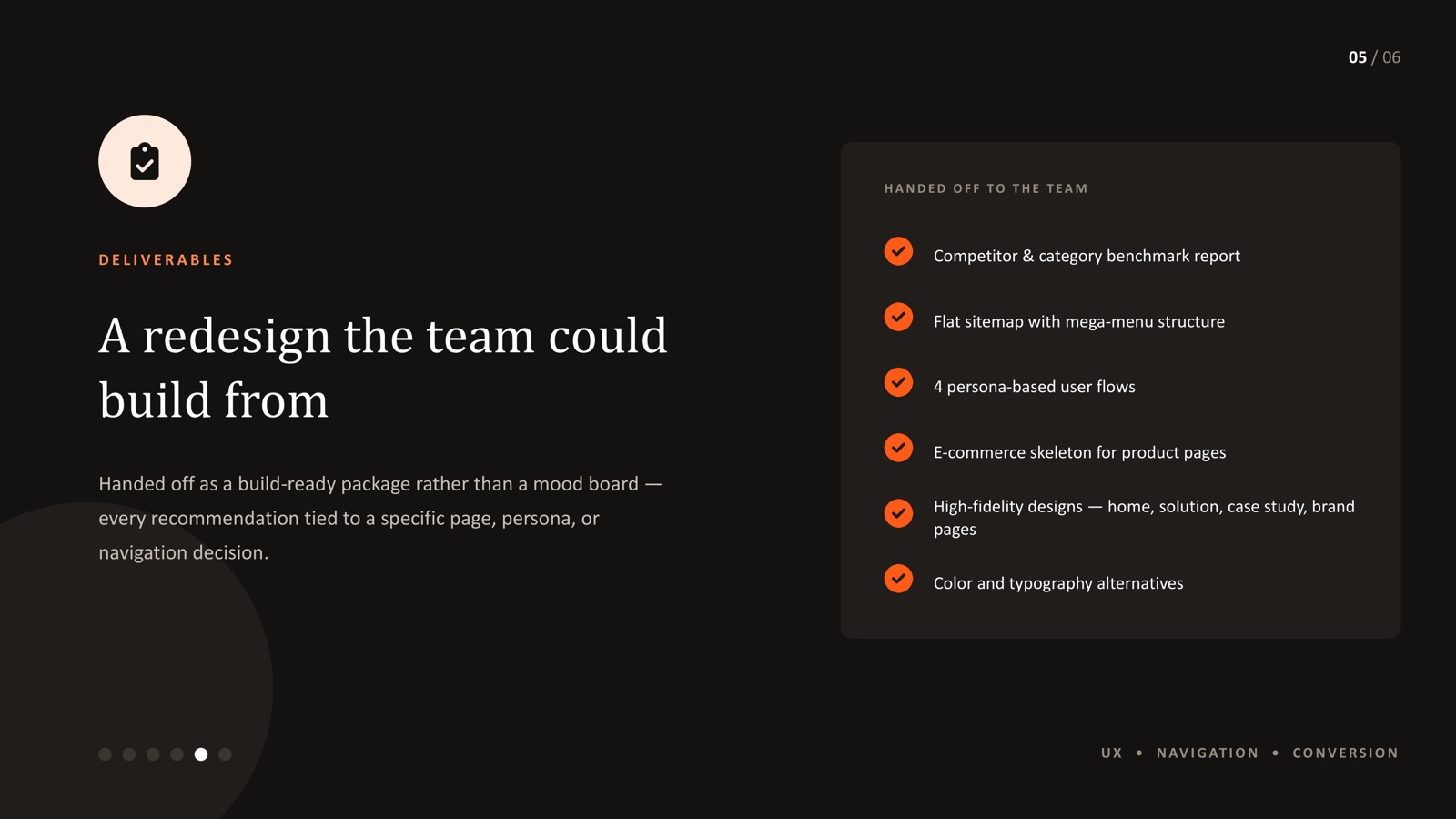
The old site used a boxed layout filling only 60% of screen width - content-heavy, image-light, with no e-commerce foundation. Getting from that to a build-ready redesign followed the same four moves it always does: listen and align on the real buyers, define what's actually broken, design around their journeys, then refine and hand over a structure ready to build.

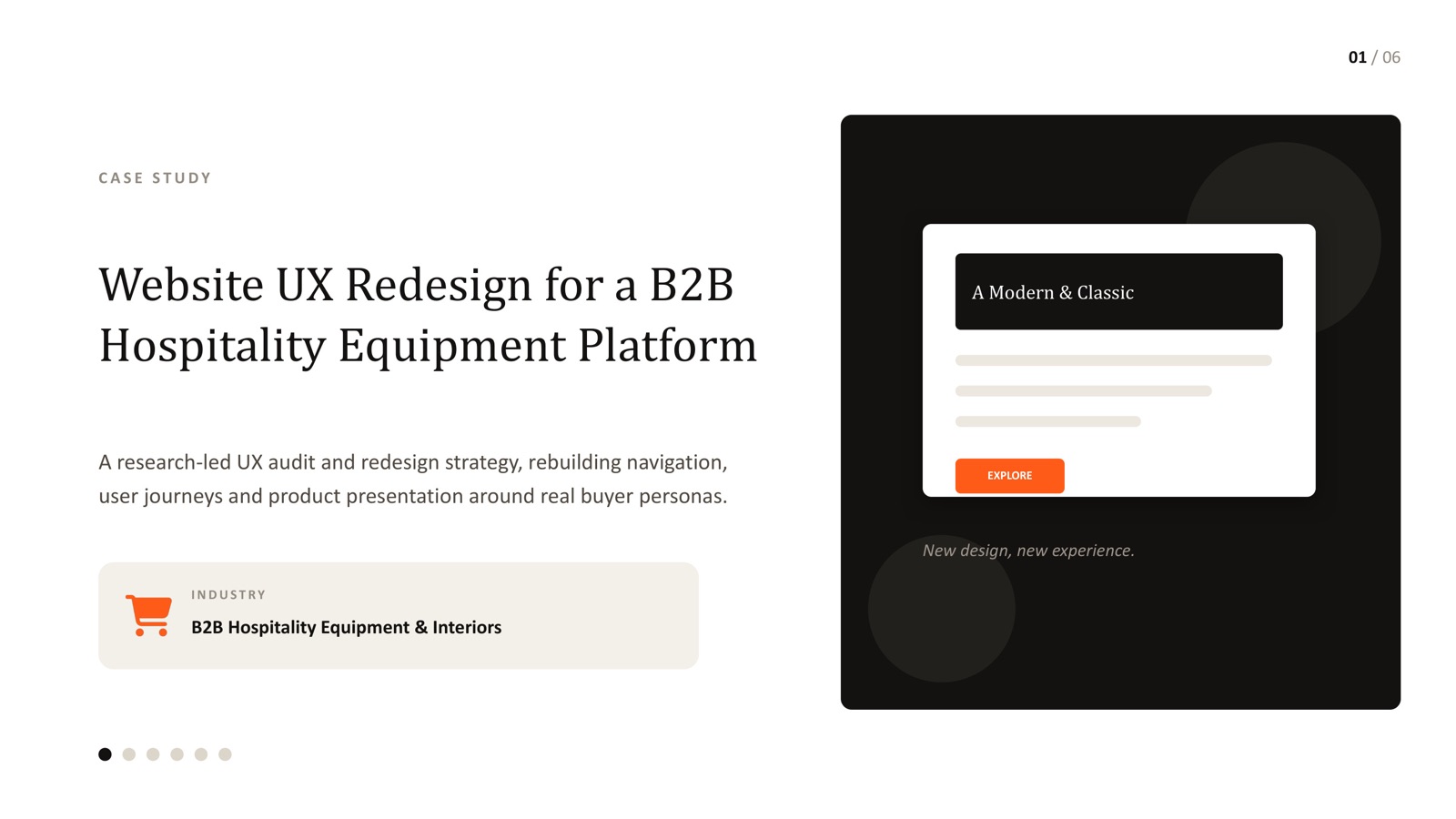
I've spent 10+ years turning messy digital problems into usable products - including a research-led UX audit and redesign for a B2B hospitality equipment platform, rebuilt around real buyer personas rather than internal category structures.
"Ashish is creative, smart, and FUN to work with. He is always willing to do whatever it takes to get the job done under tight time constraints. His ability to think outside the box adds tremendous value."

"Ashish is the smartest and most creative graphic and web designer I have worked with - his innovative thinking and hard work has led many successful projects and satisfied clients."

Yes - a research-led UX audit and redesign strategy for a B2B hospitality equipment platform, rebuilding navigation, user journeys and product presentation around real buyer personas.
Both, depending on what you have. If you have analytics, sales feedback or past research, I'll start there; if not, we scope in lightweight research alongside the audit so recommendations are grounded in real buyer behaviour.
Yes - the work focuses on templates, navigation and information architecture patterns that scale across a large catalog, rather than redesigning every page individually.
Typically a fixed-scope UX audit first, followed by a redesign phase if you want to move forward. We'll agree on scope and price on the intro call before anything starts.
No pitch deck, no pressure. Just a focused call about your platform, your buyers and whether I'm the right fit.