- Healthcare UX audits need to weigh heuristic evaluation, journey analysis and accessibility together - not as three separate reviews.
- Drop-off in healthcare workflows is rarely a single broken screen - it's usually friction that compounds across a multi-step process.
- Competitor benchmarking matters even in regulated industries - buyers compare experiences whether or not the category "should" be comparable.
- Findings need to be ranked by impact and effort, not delivered as an undifferentiated 60-page report.
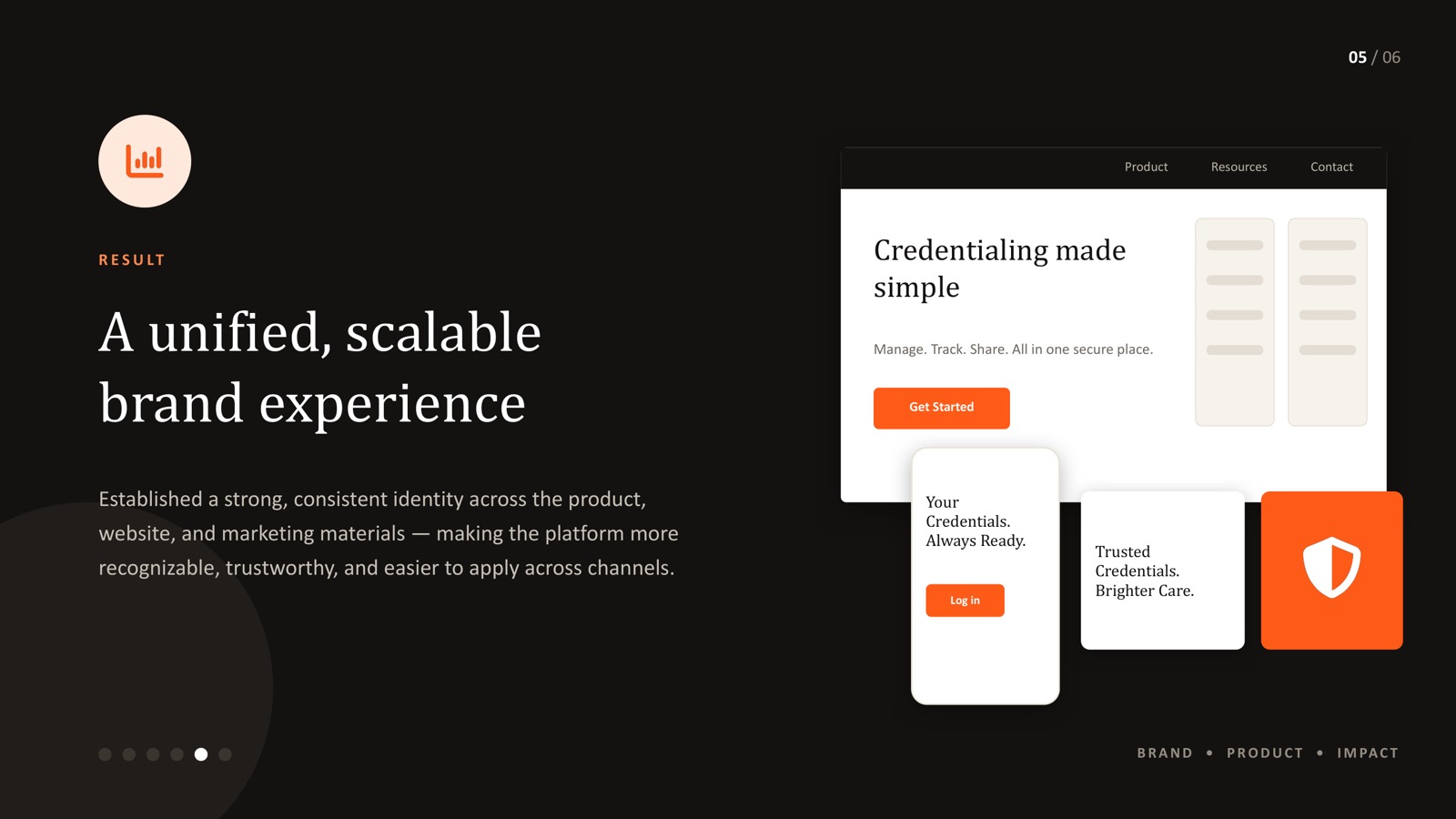
- This is the same rigor behind our healthcare credentialing platform case study.
Healthcare teams are often more hesitant than most to run a UX audit - there's a reasonable worry that "friction" in a regulated workflow is just the cost of doing things correctly. In practice, that's rarely true. Most of the friction that causes clinicians, patients and administrators to abandon a healthcare workflow isn't regulatory necessity - it's accumulated UX debt that nobody has had the time to untangle.
A structured audit exists to tell the difference: what's friction you can safely remove, and what's a genuine constraint you need to design around.
What a real healthcare UX audit actually covers
A useful audit isn't a single lens - it's several run together, because healthcare products fail users in more than one way at once:
- Heuristic evaluation - a structured walk through core flows against proven usability principles, not just a designer's opinion
- Journey and drop-off analysis - mapped to where users actually abandon a task, using analytics where available and structured walkthroughs where it isn't
- Accessibility review - WCAG-informed, so fixes ship alongside everything else instead of becoming a separate fire drill
- Competitor benchmarking - a clear-eyed look at how comparable platforms handle the same flows, because your users are comparing you to them whether the comparison is "fair" or not
Drop-off is usually cumulative, not singular
The instinct when a workflow underperforms is to look for the one broken screen. In healthcare credentialing and clinical operations tools, the more common pattern is cumulative friction - a slightly confusing status label here, an unnecessary re-entry of information there, a form that doesn't explain why it's asking - each individually tolerable, together enough to make someone give up or call support instead of finishing. A good audit maps the whole journey, not just the screen with the highest bounce rate.
Prioritise by impact, not by what's easiest to fix
The output of an audit is only useful if a team can act on it. That means every finding needs to be ranked by actual impact on the user journey and effort to fix - not delivered as an undifferentiated list a product team has to triage themselves. In a healthcare context specifically, this ranking also needs to account for compliance risk: a low-effort fix that touches a regulated workflow may need more care than its "effort" score alone suggests.
The most common mistake I see healthcare teams make with UX audits is treating them as a one-time compliance exercise instead of a diagnostic tool. A good audit isn't there to prove the product is fine - it's there to find the handful of specific places where real users are quietly giving up, and to be honest about which of those are worth fixing first.
On the healthcare credentialing platform I worked on, the audit findings that mattered most weren't the dramatic ones - they were the small, cumulative pieces of friction across the credentialing journey that, fixed together, changed how trustworthy the whole product felt. That's usually where the real return is: not one big fix, but several small ones that compound.
Getting started
A focused audit is usually the fastest, lowest-risk way to find out whether your healthcare platform's UX problems are a five-fix problem or a rebuild problem - before committing to either. This is the same diagnostic approach behind our full healthcare case study. If you're based in Mumbai's BFSI-adjacent healthcare sector or Hyderabad's pharma and life sciences corridor, the compliance stakes of getting this right are usually higher still.
Want to know where your platform is actually losing people?
A fixed-scope audit finds the answer before you commit to a redesign.