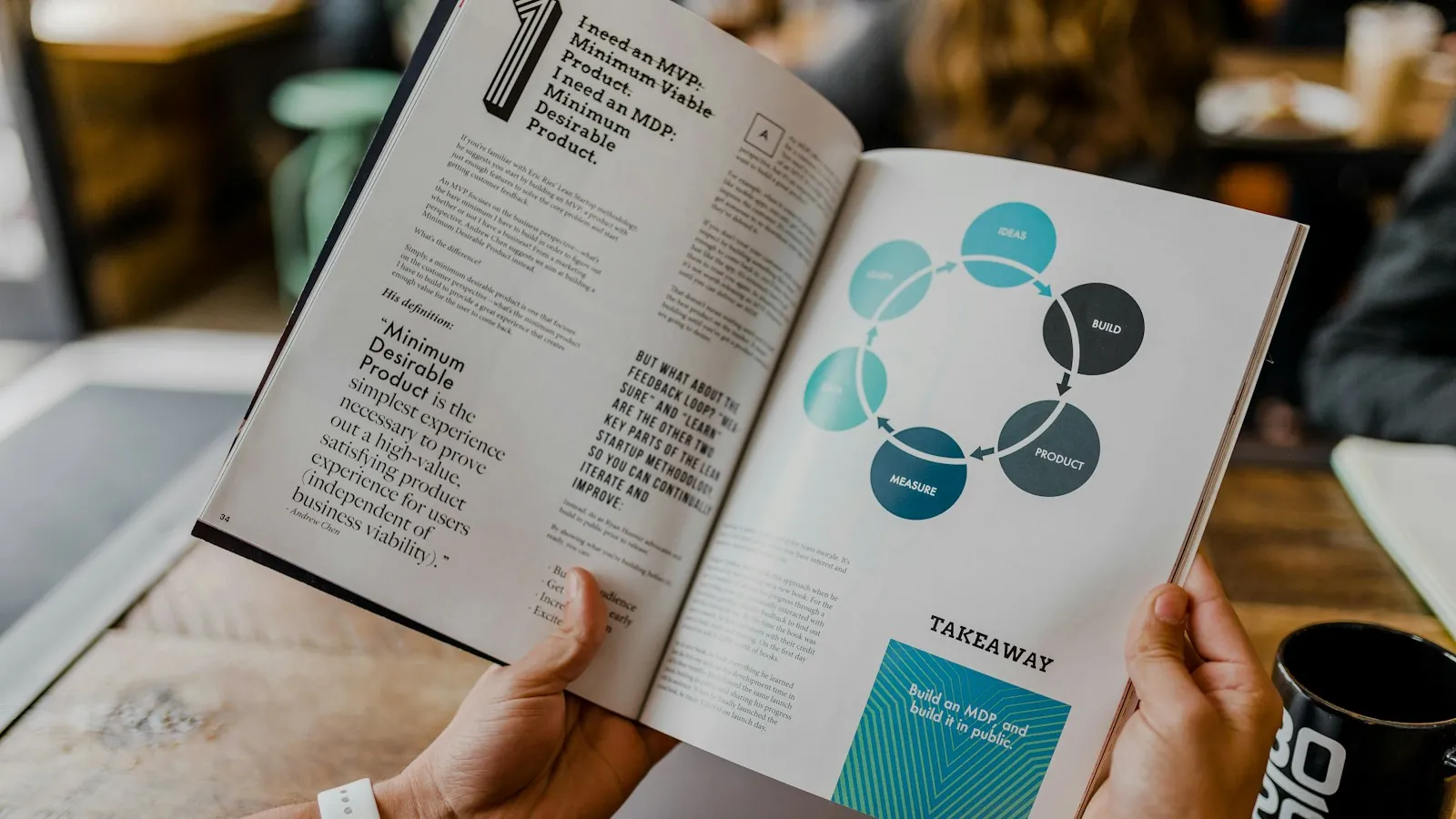
Open brand guideline book with diagrams
Home / Brand Strategy & Identity / Brand systems
Brand Strategy & Identity · Brand systems

Brand systems that keep you consistent when everyone is shipping

Guidelines with rules you can check, templates people actually prefer to use, and a governance model that answers "who decides" - so the brand survives the week after launch.

Measurable guidelinesTemplatesComponent librariesGovernance

The difference between brand assets and a brand system

Most growing companies have brand assets: logo files, a colour palette, a font, perhaps a guideline PDF. Far fewer have a brand system - a governed set of rules, templates and components that lets many people produce consistent work without asking a designer every time.

The gap shows up quickly. Every landing page, proposal, webinar deck and product screen becomes a small brand decision made by whoever is building it. Within a year the company looks like several companies. For buyers assessing operational maturity - procurement is a decision-maker in 53% of B2B buying cycles, according to Forrester - that inconsistency reads as disorganisation.

A brand system closes the gap with four things: rules specific enough to check, tools that make the right choice the easy one, a way to change the system, and an owner.
Is this you?

Signs you need a brand system

01

Several logo versions in circulation

Nobody is sure which is current.

02

Guidelines nobody opens

A PDF exists, but new material ignores it.

03

Every team has its own template

Sales, marketing and regional offices each maintain their own decks and documents.

04

Agencies interpret the brand differently

Each new campaign looks like a different company.

05

Product and marketing don't match

The app and the website use different colours, type and tone.

06

Brand questions keep reaching the same person

One designer is the bottleneck for every decision.

Rules you can check

The heart of a brand system is a set of measurable rules. Descriptive guidance - "use the logo appropriately", "keep layouts airy" - cannot be applied consistently because it depends on who is reading it. Measurable rules can.

AreaDescriptive guidanceMeasurable rule (example)
Logo size"Don't make it too small""Minimum 160px wide on desktop, 120px on mobile; symbol only below 32px"
Colour"Use the accent for emphasis""Accent for primary actions only; text pairings limited to the tested list"
Accessibility"Keep text readable""Text meets 4.5:1 contrast; large text 3:1"
Layout"Consistent layouts""12 / 8 / 4 column grid; spacing on the 4-64px scale only"
Tone"Friendly and professional""Buttons start with a verb; no superlatives without proof"

The logo, grid and spacing examples come from an infrastructure brand system where every rule had a clear pass or fail answer. For more on the principle, see enforceable design systems vs style guides.

Tools that make the right choice easy

People follow the easiest path. A brand system includes the tools that make consistent work the fastest option:

  • Document templates - proposals, reports, capability statements and letters with locked styles.
  • Presentation templates - a master deck with layouts for the slides teams actually build.
  • Design libraries - components, colour and type styles in the design tool your team uses.
  • Design tokens - named values for colour, type and spacing shared between design and code; the W3C community group published the first stable Design Tokens specification in October 2025.
  • Asset library - one organised, current source for logos, imagery and icons.
  • Checklists - short pre-publish checks attached to templates.

Figma's research found designers completed a task 34% faster with a design system than without one. The same effect applies to brand production: good templates are faster than blank pages.

The process

How I build a brand system

  1. 01

    Audit what exists

    Every asset, template and live application, and where inconsistency comes from.

  2. 02

    Consolidate

    One logo system, one palette with roles, one type system; archive the rest.

  3. 03

    Write measurable rules

    Covering the decisions people make every week, each with a reason and examples.

  4. 04

    Build templates and libraries

    Starting with the highest-volume, highest-stakes material.

  5. 05

    Set up governance

    Owner, contribution and change process, changelog.

  6. 06

    Train and launch

    Short sessions for each team, plus a place to ask questions.

Governance: who decides, and how the system changes

A brand system that cannot change will be ignored; one that anyone can change will fragment. Governance answers the practical questions:

QuestionTypical answer
Who owns the system?A named brand or design lead, with a deputy
What can people do without asking?Anything built from approved templates, components and rules
What needs review?New patterns, new logo uses, new colour pairings, co-branding
How are changes proposed?A short request with the use case and a draft, reviewed on a set cadence
How are changes communicated?A changelog and a short note to affected teams
How is compliance checked?Spot audits of live material each quarter

What you get

01

Brand guidelines

Measurable rules for logo, colour, type, layout, imagery and tone.

02

Templates

Documents, presentations and social formats built on the system.

03

Design library

Components and styles in your design tool, plus tokens for development.

04

Asset library

One organised source of truth for brand files.

05

Governance charter

Ownership, contribution, review and change processes.

06

Training

Sessions and quick-reference guides for each team.

AI enterprise brand system phases
From the work

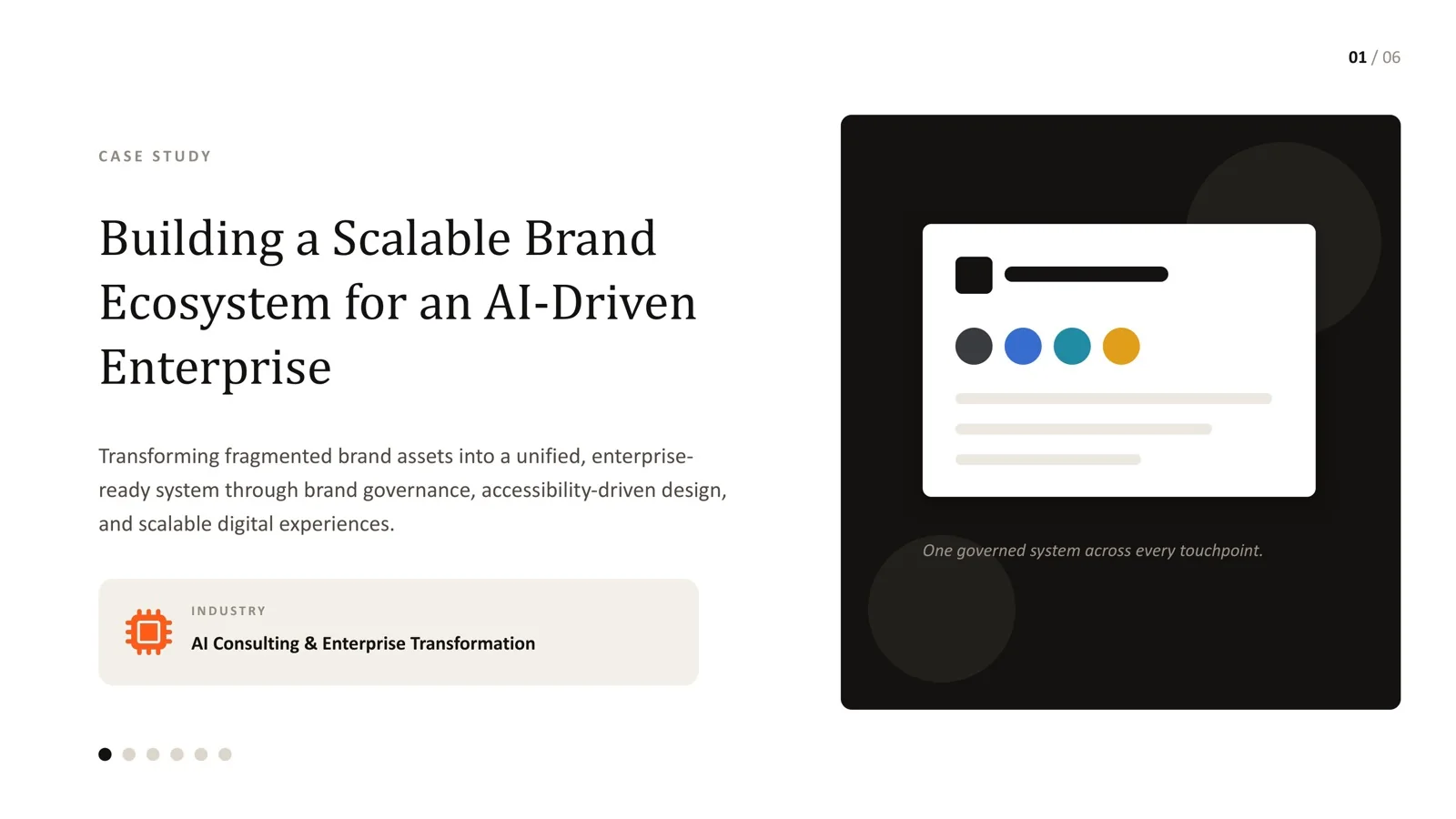
Six phases, one governed system for an AI enterprise

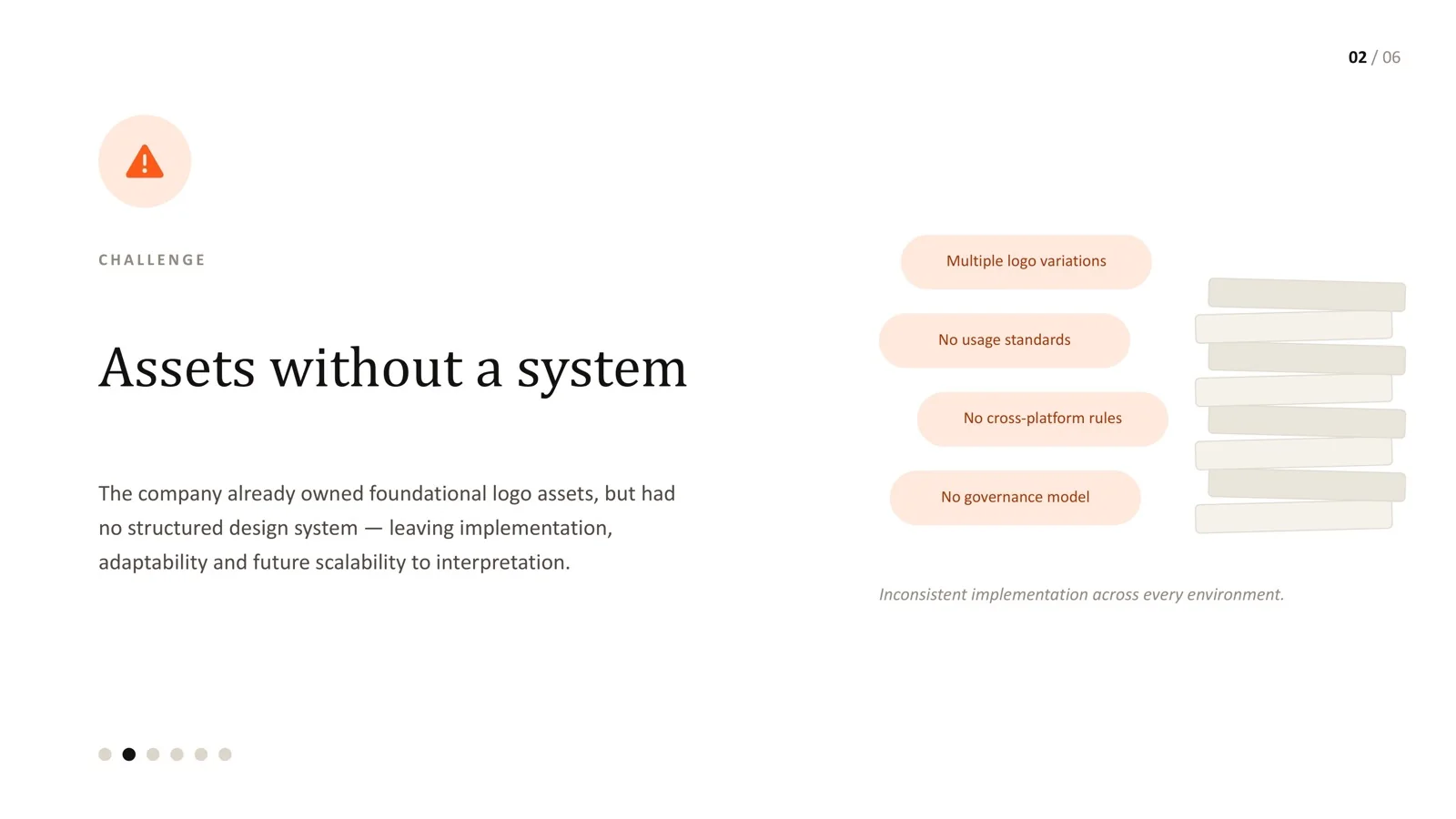
An AI-driven enterprise had fragmented brand assets - multiple logo variations, no usage standards and inconsistent implementation across web, product and marketing.

  • Built across six phases: positioning, logo system, colour and type, website UX, applications and governance.
  • A four-layer colour system re-tested against WCAG 2.1, lifting the primary pairing to 17.26:1.
  • Governance rules a distributed team could apply without a design bottleneck.
Read the AI brand case study →

Frequently asked questions

Is a brand system the same as a design system?

They overlap. A brand system covers identity, messaging and marketing applications; a product design system covers UI components and patterns. The best setups share colour, type, accessibility rules and governance.

Can you build a system on our existing identity?

Yes - that is often the best value. If the identity is sound, consolidating it and adding rules, templates and governance fixes most inconsistency without a rebrand.

Which templates should we build first?

The ones produced most often and seen by buyers: proposals, presentations and the main web page types, followed by social and email.

How do we keep agencies on-brand?

Give them the same templates, libraries and rules, include compliance in briefs and acceptance criteria, and review work against named rules.

How often should the system be updated?

Small, regular updates with a changelog work better than a large rewrite every few years. Review rules and templates at least twice a year.

Sources

Every statistic in this page links to its original publisher. Figures were checked against these sources on September 29, 2026.

  1. The State Of Business Buying, 2026 - Forrester, 2026
  2. Design Tokens specification reaches first stable version - W3C Design Tokens Community Group, October 2025
  3. Measuring the value of design systems - Figma
Let's solve something

Brand assets everywhere, system nowhere?

Let's turn what you have into a governed system your team can apply without asking. Book a 30-minute call.

Book a 30-min call ↗