The messaging hierarchy
The core tool is a messaging hierarchy: a structured set of statements from the single most important idea down to supporting details. It tells every writer what to lead with and what to use as support.
| Level | What it is | Where it's used |
|---|
| Core message | The one idea you want buyers to remember | Homepage headline, elevator pitch, boilerplate |
|---|
| Pillars | Three or four supporting themes, each tied to buyer value | Website sections, deck structure, campaign themes |
|---|
| Proof points | Evidence for each pillar: numbers, customers, credentials, examples | Case studies, proposals, sales conversations |
|---|
| Audience variations | Emphasis for each buyer role | Role-specific pages, emails, proposal sections |
|---|
| Boilerplates | Standard descriptions in 25, 50 and 100 words | Directories, press, partner listings, proposals |
|---|
Tone of voice that people can apply
Tone-of-voice guides often fail because they describe personality ("we are bold but warm") without showing what to do. A usable guide defines a few voice principles, each with practical rules and before-and-after examples.
For B2B and regulated industries, the principles usually include some version of:
- Clear before clever. Say what you do in plain words; save wordplay for places where clarity is already secured.
- Specific over superlative. Replace "industry-leading" with a number, a customer or a fact.
- Calm and precise. Especially in healthcare, finance and infrastructure, where confidence comes from accuracy.
- Human, not casual. Warm and direct without slang that undermines seriousness.
| Instead of | Try |
|---|
| "We deliver innovative, end-to-end credentialing solutions." | "One provider profile, reused across every payer application." |
|---|
| "Industry-leading support." | "A named contact, with replies within one business day." |
|---|
| "Error: invalid input." | "That licence number looks incomplete - it should have 8 digits." |
|---|
| "Transforming the future of infrastructure." | "Delivering grid, road and water projects across four states since 2004." (illustrative) |
|---|
Product and UX writing
Communication direction extends into the product, where tone is tested hardest. I include principles and patterns for:
- Labels and buttons - verbs that say what will happen ("Submit application", not "OK").
- Status messages - the same words for the same states everywhere, with the next step.
- Errors - what happened, why, and how to fix it, without blame.
- Empty states - what this area is for and how to start.
- Notifications - relevant, dated and written in the same language as the product.
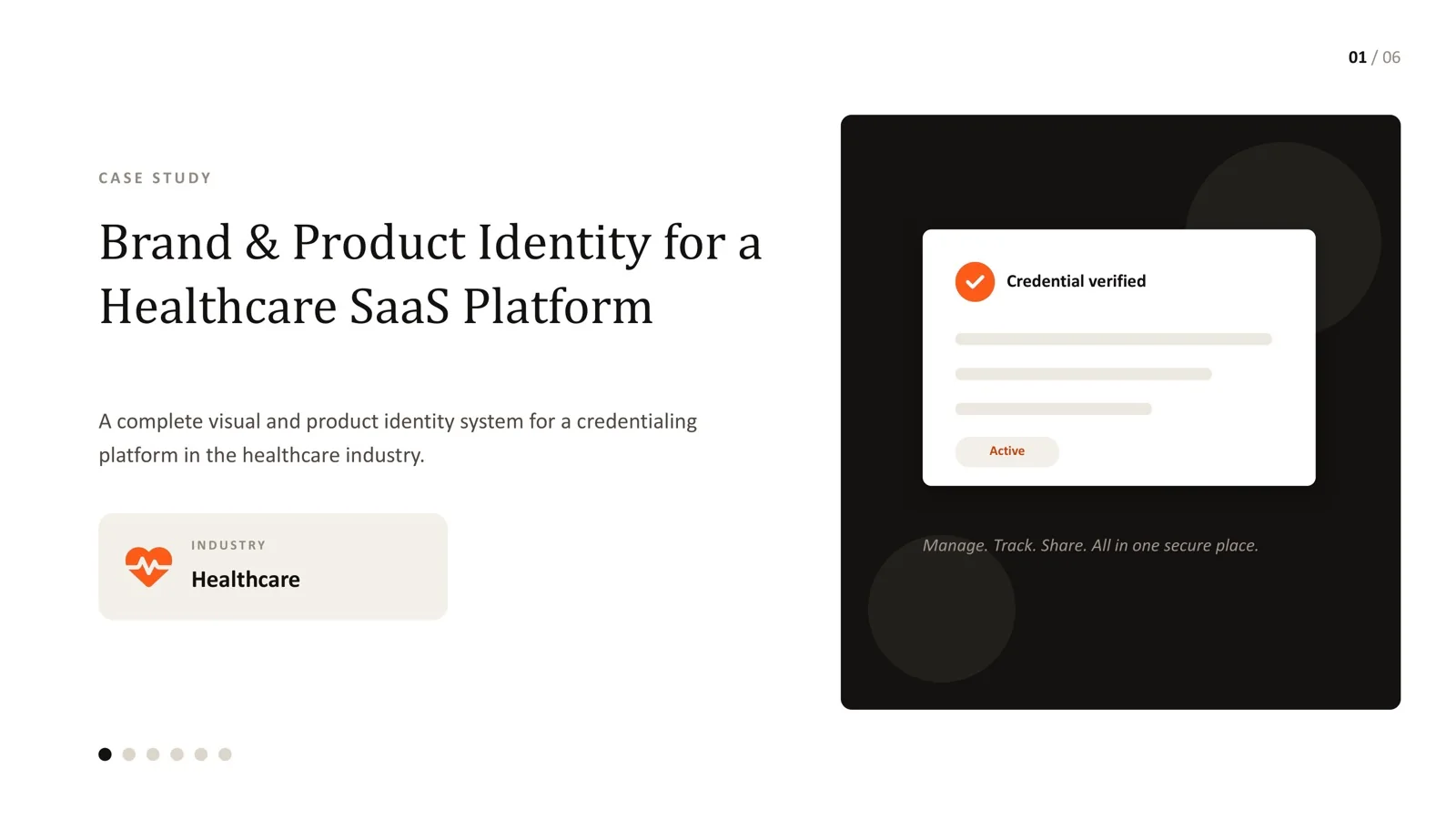
On a healthcare credentialing platform, status language such as "Active" and "Verified" was defined as part of the brand and product system, so the words carried the same meaning in the dashboard, email and marketing site.