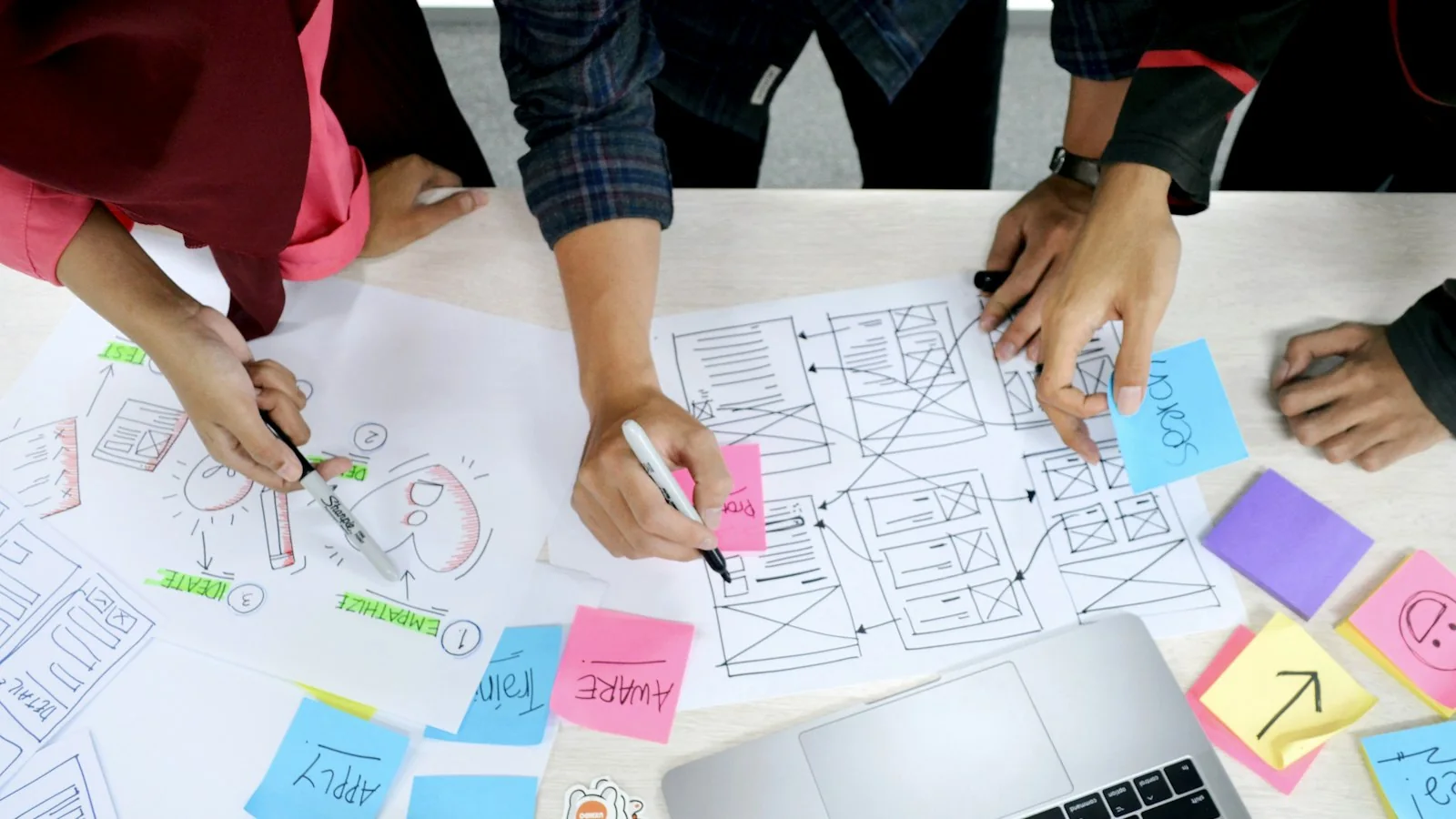
Colleagues gesturing during a design discussion around laptops
Home / Creative Direction & Collaboration / Design reviews
Creative Direction & Collaboration · Design reviews

Design reviews that make the work better, not just approved

I set up and run design reviews that judge work against goals, users and principles rather than personal taste - so feedback is specific, decisions are quick and quality stays consistent across teams.

Structured critiqueReview criteriaQuality gatesAccessibility checksDecision logs

Why most design reviews underperform

Design reviews are where quality should be protected. Too often they become something else: a presentation followed by a round of personal preferences, dominated by the most senior voice, with feedback that is vague ("make it pop"), contradictory ("more space" and "fit more in") or arrives too late to act on. Designers leave unsure what to change. Work gets approved because people ran out of time, not because it was right.

A good review practice fixes the structure. It separates critique from approval, judges work against agreed criteria, and turns feedback into specific, actionable decisions.

Is this you?

Signs your reviews need work

01

Feedback is about taste

"I don't like it" rather than "this doesn't meet the goal".

02

The loudest voice wins

Decisions follow seniority, not evidence.

03

Work arrives too finished

Big problems are found when changing them is expensive.

04

Reviews happen once, at the end

No chance to shape work while it's forming.

05

Quality varies by team

Some teams' work is reviewed rigorously; others' isn't at all.

06

Accessibility is checked last

Or not at all.

Two kinds of review

I separate two review types that are often blurred together:

CritiqueApproval review
PurposeImprove work in progressDecide whether work is ready to ship
WhenEarly and often, while work is changeableAt defined checkpoints
WhoDesigners and close collaboratorsDecision-makers named in the brief
ToneExploratory, questioningDecisive
OutputSpecific suggestions and open questionsApprove, approve with changes, or rework

Mixing them causes most review problems: critique becomes a verdict, and approvals turn into brainstorming.

Reviewing against criteria, not taste

Every review starts by restating what the work is for: the goals and success criteria from the brief, the users and their tasks, and the design principles. Feedback is then framed against those. This is why stakeholder alignment comes first - without agreed criteria, reviews default to opinion.

A practical review checklist, adapted per project:

AreaQuestions
GoalDoes this solve the problem in the brief? For which users?
UsabilityCan users complete the task? Are status, errors and next steps clear? See Nielsen's heuristics.
ConsistencyDoes it use the design system correctly? Any new patterns - and are they justified?
AccessibilityDoes text meet 4.5:1 contrast? Is meaning conveyed without colour alone? Is focus visible?
ContentIs the language clear, consistent and in the brand voice?
BrandDoes it express the creative direction and principles?
FeasibilityHas engineering seen it? Any performance or technical risks?

Giving feedback people can use

I coach teams on a simple format for feedback: observation, impact, suggestion. "The status label uses only colour (observation), so colour-blind users and anyone printing this can't tell states apart (impact); add the status text and an icon (suggestion)." Specific, tied to users, and actionable - and much easier to hear than "the status feels off".

Keeping reviews fast

  • Timebox - a clear agenda and time per item.
  • Pre-read - share work and context before the session.
  • One question - the presenter states the specific decision or feedback they need.
  • Decide in the room - or name who will decide and by when.
  • Log it - decisions and reasons recorded, so they aren't reopened.

The process

How I set up a review practice

  1. 01

    Observe current reviews

    How they run, who attends, what gets decided.

  2. 02

    Define review types

    Critique and approval, with purpose, cadence and attendees.

  3. 03

    Agree criteria

    A checklist tied to goals, users, principles, the design system and accessibility.

  4. 04

    Run reviews

    Facilitate the first cycles and coach presenters and reviewers.

  5. 05

    Log decisions

    A lightweight record everyone can find.

  6. 06

    Refine

    Adjust cadence and criteria after a few cycles.

What you get

01

Review framework

Critique and approval reviews with clear purposes.

02

Review criteria

A checklist tailored to your product, brand and standards.

03

Feedback guide

Observation, impact, suggestion - with examples.

04

Facilitation

Running reviews directly or coaching your leads to.

05

Decision log

A record of what was decided and why.

06

Quality gates

Where approval is needed before work ships.

Frequently asked questions

Who should attend design reviews?

Critiques: designers and close collaborators such as product and engineering leads. Approval reviews: the decision-makers named in the brief. Keeping groups small keeps reviews useful.

How often should reviews happen?

Critiques weekly or more during active design; approval reviews at defined checkpoints. The cadence should match how fast the work moves.

Can you run reviews for our agencies' work?

Yes. Structured reviews against shared criteria help agencies deliver work that fits, with fewer rounds.

Won't structured reviews slow us down?

They speed things up. Clear criteria and decisions in the room replace the repeated, unfocused rounds that slow most projects.

Should accessibility be part of every review?

Yes. Catching contrast, focus and labelling issues in review is far cheaper than fixing them after build.

Sources

Every statistic in this page links to its original publisher. Figures were checked against these sources on September 29, 2026.

  1. 10 Usability Heuristics for User Interface Design - Jakob Nielsen, Nielsen Norman Group
  2. Understanding SC 1.4.3: Contrast (Minimum) - W3C
Let's solve something

Reviews turning into opinion contests?

Let's give them structure. Book a 30-minute call.

Book a 30-min call ↗