
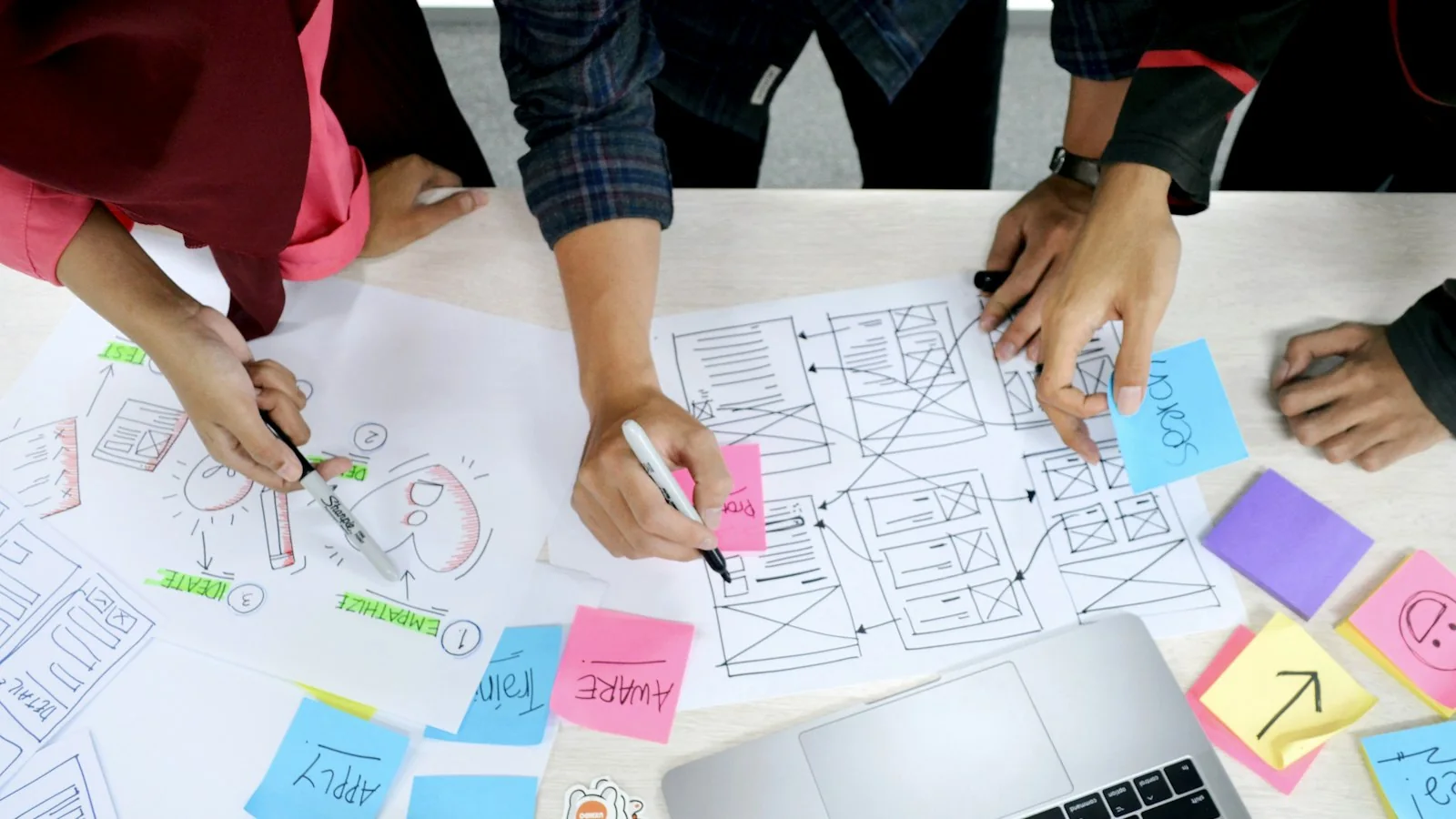
Team working together around a table with laptops
Home / Creative Direction & Collaboration
Services · Creative Direction & Collaboration

Creative direction that keeps teams aligned and work moving

Good design needs more than good designers. I provide the direction, alignment and review practices that help product, marketing and engineering teams agree faster, decide better and ship work that holds together.

Creative directionStakeholder alignmentDesign reviewsCross-functional collaborationTeam guidance & handoff

Why direction and collaboration matter as much as craft

Most design problems I'm asked to solve aren't really about pixels. They're about people: a brief nobody agreed on, stakeholders who see the work for the first time at the final review, feedback that contradicts last week's feedback, designers and engineers working from different assumptions, and handoffs where half the decisions get lost.

Creative direction and collaboration address that layer. They make sure a team knows what it's trying to achieve, agrees how good work will be judged, reviews it in a way that improves it, and hands it over in a form that survives build.

This is work I've done throughout my career: pre-sales conversations, requirements gathering and client sign-off at Vidushi Infotech and GO MO Group; daily client-facing presentations and design-system adoption across teams at Robosoft Technologies; and presenting design reasoning to leadership, product, marketing and engineering on every project since. Across long-running engagements, that approach has helped keep client retention at 90%.
What's included

The five parts of the work

Useful on their own - for example, setting up a design review practice - or together as ongoing creative leadership.

01

Creative direction

A clear point of view that ties brand, product and campaign work together. Explore creative direction.

02

Stakeholder alignment

Getting leadership and teams to agree the problem, goals and criteria before design starts. Explore stakeholder alignment.

03

Design reviews

Critique and approval practices that improve work instead of just approving it. Explore design reviews.

04

Cross-functional collaboration

Working rhythms that connect design with product, engineering, marketing and compliance. Explore collaboration.

05

Team guidance & design handoff

Mentoring designers and handing off work so engineering builds what was designed. Explore guidance & handoff.

06

Presentation and storytelling

Communicating design reasoning to leadership, buyers and investors.

The cost of misalignment

Poor communication is expensive. PMI's Pulse of the Profession research on communications found that of the US$135 million at risk for every US$1 billion spent on projects, about US$75 million - more than half - is put at risk by ineffective communication. In B2B, the challenge is compounded by the size of decision groups: Forrester counts 13 internal stakeholders and nine external influencers in a typical buying decision - and internal design decisions often involve a similarly wide circle of opinions.

US$75Mof every US$1B in project spend put at risk by poor communicationPMI, 2013
13 + 9internal stakeholders and external influencers in a typical B2B decisionForrester, 2026
90%client retention across long-running engagementsAshish Prasad, Robosoft Technologies

Common symptoms I'm asked to fix

SymptomUsual root causeWhat helps
Endless feedback roundsNo agreed brief or criteriaWritten goals and success criteria agreed up front
Late-stage surprises from leadershipStakeholders not involved earlyStakeholder mapping and early alignment sessions
Reviews that feel personalFeedback based on taste, not goalsStructured critique against agreed criteria
Designs change during buildWeak handoff, engineers not involvedJoint reviews, detailed specs, design QA
Inconsistent output across teamsNo shared direction or systemCreative direction plus a governed design system
Junior designers stuckLittle guidance on reasoningRegular critique and pairing
The process

How I work with teams

  1. 01

    Listen

    Understand the teams, decision-makers, current process and where work gets stuck.

  2. 02

    Align

    Agree goals, audiences, constraints and how success will be judged.

  3. 03

    Set direction

    A clear creative point of view and principles teams can apply.

  4. 04

    Establish rhythms

    Reviews, check-ins and decision points that fit how the teams already work.

  5. 05

    Guide the work

    Critique, pairing and decisions as work progresses.

  6. 06

    Hand over and follow through

    Specifications, design QA and reflection on what to improve next time.

Principles that make collaboration work

  • Write things down. Goals, decisions and criteria in writing prevent re-litigation.
  • Involve people early. Stakeholders who help shape the problem support the solution.
  • Critique the work, not the person. Feedback tied to goals and users is easier to act on.
  • Decide who decides. Clear decision rights end circular debates.
  • Design with engineering, not for it. Early technical input avoids late surprises.
  • Show, don't just tell. Prototypes and real examples align people faster than documents.
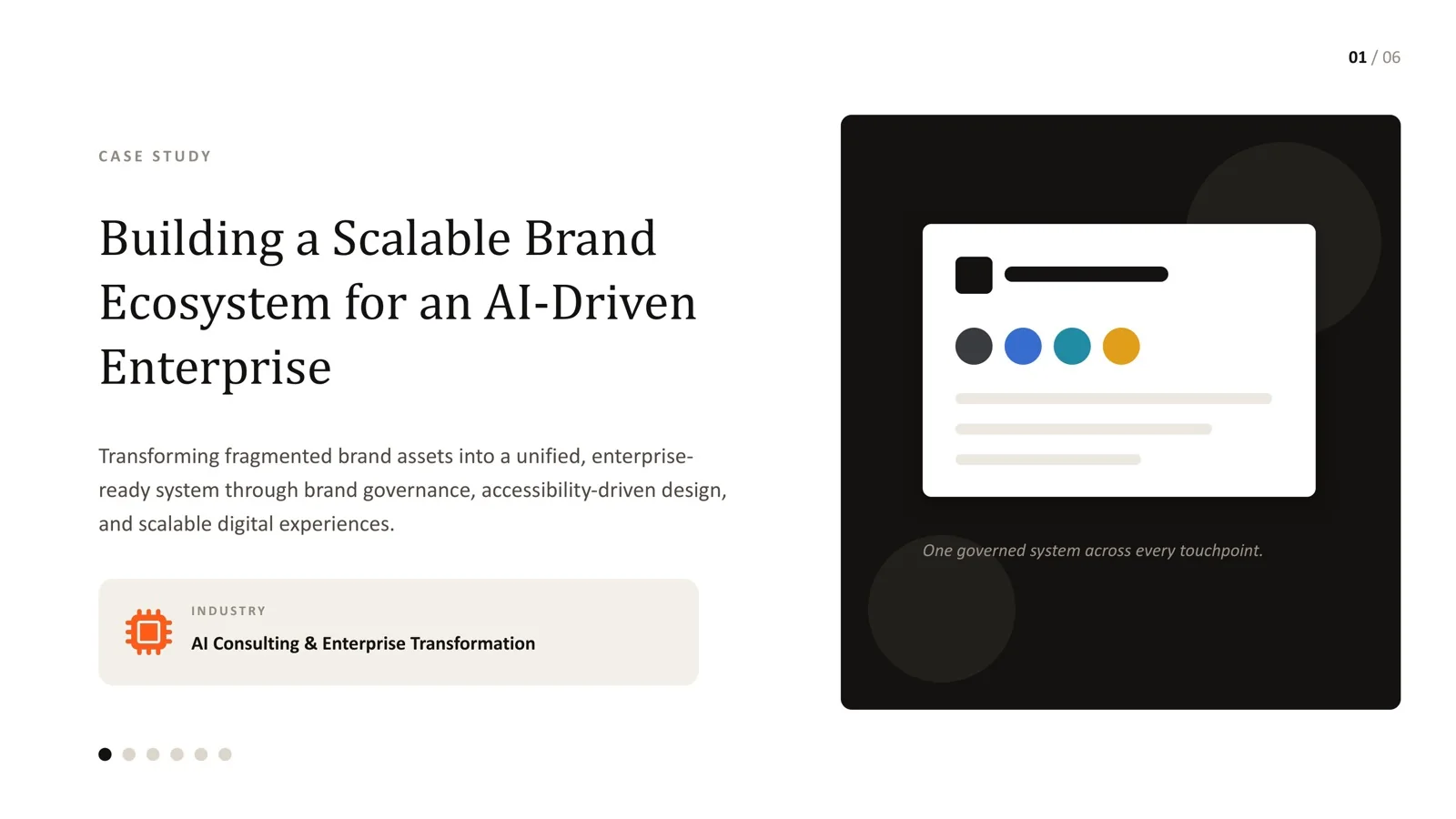
AI enterprise brand ecosystem overview
From the work

Aligning product, marketing and engineering around one system

An AI-driven enterprise had engineers and marketers each interpreting the brand their own way, with no shared reference.

  • Six phases, each with a clear deliverable agreed before the next began.
  • A governance charter that let a distributed team apply the system without a design bottleneck.
  • One shared reference for product, marketing and engineering, instead of separate interpretations.
Read the AI brand case study →

Frequently asked questions

Can you act as a part-time creative director?

Yes. Some teams engage me for ongoing direction and review alongside their in-house designers, rather than for a single project.

Do you work with in-house teams and agencies together?

Often. Part of the value is giving in-house teams and agencies one direction and one set of criteria to work to.

How do you handle stakeholders who disagree?

By making the disagreement explicit and tying it back to agreed goals and evidence. Clear decision rights - who decides what - resolve most conflicts.

Can you help our designers grow?

Yes. Regular critique, pairing on real work and explaining reasoning are part of how I work with design teams.

Is this relevant for small teams?

Yes. Even small teams benefit from written goals, clear decision-making and a light review practice - often more, because each person wears several hats.

Sources

Every statistic in this page links to its original publisher. Figures were checked against these sources on September 29, 2026.

  1. Communication: The Message Is Clear - PMI white paper, citing PMI Pulse of the Profession In-Depth Report: The Essential Role of Communications, 2013
  2. The State Of Business Buying, 2026 - Forrester, 2026
Let's solve something

Great people, but design keeps stalling?

Book a 30-minute intro call or send a message. Tell me where decisions get stuck and I'll suggest where to start.

Book a 30-min call ↗