Photographer on a mountain ledge above the clouds
Home / Creative Direction & Collaboration / Creative direction
Creative Direction & Collaboration · Creative direction

Creative direction: one point of view across everything you make

A clear creative direction tells every designer, writer and agency what "good" looks like for your company - so a website, a product release and a trade-show stand all feel like they came from the same confident team.

Creative visionDesign principlesMoodboards & directionQuality oversightAgency direction

What creative direction is

Creative direction is the job of deciding - and keeping decided - what your company's work should look, sound and feel like, and making sure the people producing it all aim at the same thing. It sits above individual pieces of work. A designer makes a great landing page; creative direction makes sure that page, the product release after it and the sales deck beside it belong together.

For growing B2B, SaaS and enterprise companies, this is often the missing role. There are talented designers, marketers and agencies, and each produces good work. Without a shared point of view, the good work doesn't add up to a coherent brand. Buyers notice: in Stanford's large credibility study, a site's "design look" was the most frequently cited factor when people judged credibility, and inconsistency across touchpoints undermines exactly that.

Is this you?

Signs you need creative direction

01

Every campaign looks different

Each agency or designer brings their own style.

02

Product and marketing feel like two companies

The app and the website don't share a visual language.

03

Decisions come down to taste

Nobody can explain why one option is better, so the most senior opinion wins.

04

Quality varies by who did the work

Some pieces are excellent; others clearly rushed.

05

Big moments lack a concept

Launches and events are assembled rather than directed.

06

The brand guidelines exist but don't inspire

They cover rules, not intent.

From point of view to principles

Creative direction starts with a point of view - a short, clear statement of what the work should communicate and how it should feel - grounded in the brand's positioning. See positioning. That point of view is then translated into design principles specific enough to guide decisions.

Principle (example)What it means in practiceWhat it rules out
Show the real workReal projects, people and product screens over stock imageryGeneric handshake photos, abstract 3D filler
Calm confidenceGenerous space, restrained colour, precise languageShouting headlines, crowded layouts, superlatives
Clarity firstEvery piece has one main message and one clear actionPages trying to say everything at once
Consistent, not uniformShared system with room for expression per channelIdentical templates everywhere, or no system at all

Principles are illustrative - each company's come out of its own positioning and audience.

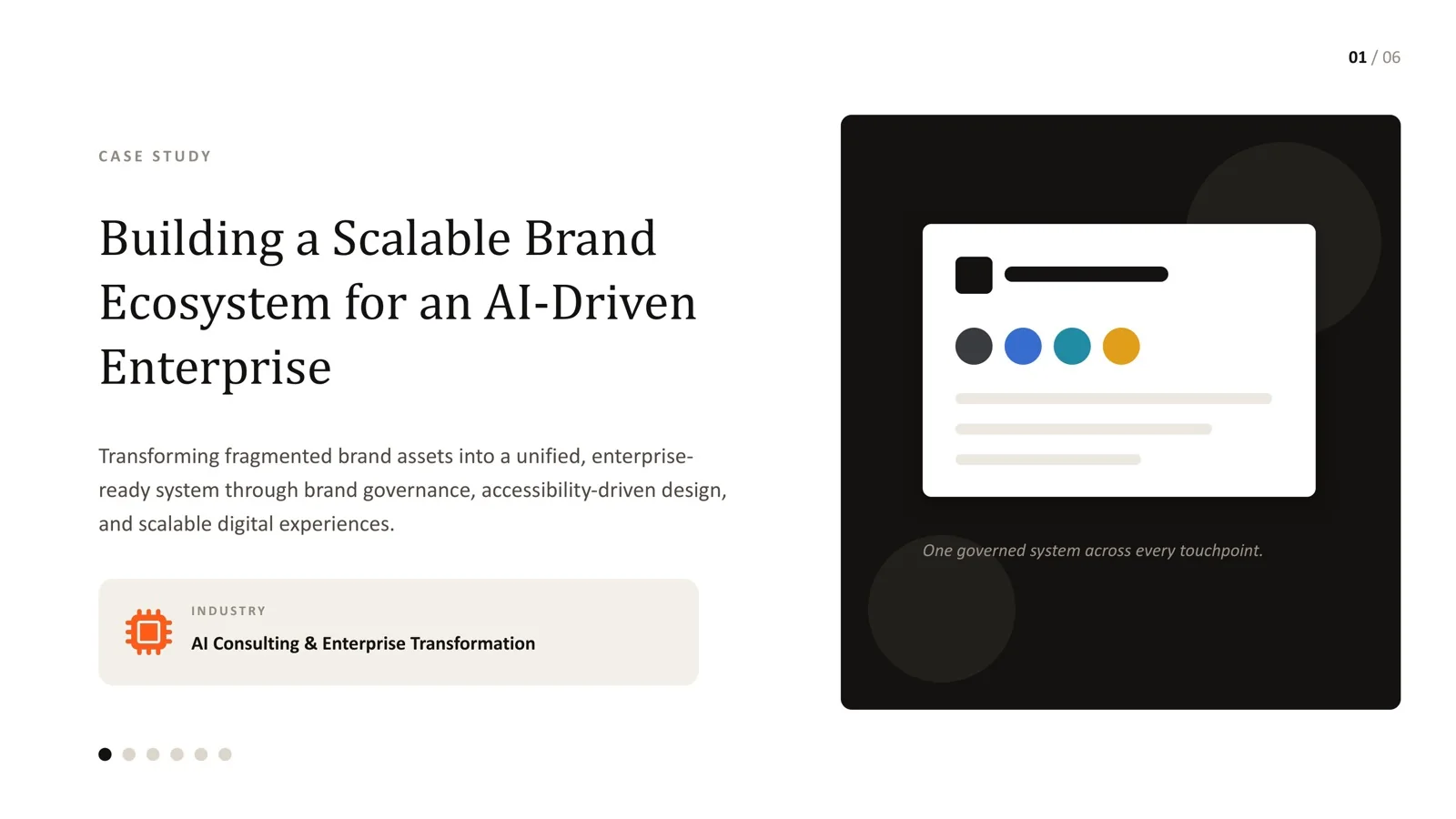
For an infrastructure company, direction meant a brand that reads as authoritative and disciplined rather than as a tech startup. For an AI enterprise, it meant moving from fragmented, improvised assets to one confident, governed voice. Both are examples of direction shaping hundreds of downstream decisions.

What creative direction covers day to day

  • Concepts for major moments - launches, campaigns, events and rebrands, developed from a single idea.
  • Visual direction - moodboards, art direction for photography and illustration, layout and typography choices.
  • Quality oversight - reviewing work before it ships against the principles, with specific feedback.
  • Agency and freelancer direction - briefs that set clear expectations, and reviews that keep work on track.
  • Product and brand alignment - making sure product UI and marketing tell the same story.

Direction that scales

The best creative direction makes itself less necessary over time. Principles, examples, templates and a governed brand system let teams make good decisions without constant review. See brand systems. Direction then focuses on the moments that genuinely need it - new concepts, big launches and quality checks - rather than approving every social post.

The process

How I provide creative direction

  1. 01

    Understand the brand and business

    Positioning, audiences, goals and the current body of work.

  2. 02

    Define the point of view

    A short statement of what the work should communicate and feel like.

  3. 03

    Set principles and references

    Principles, moodboards and before-and-after examples.

  4. 04

    Direct key work

    Concepts and art direction for the most important pieces.

  5. 05

    Review and guide

    Regular reviews against the principles, with specific, actionable feedback.

  6. 06

    Systemise

    Capture what works in templates and guidelines so it scales.

What you get

01

Creative point of view

A clear statement of intent that everyone can refer to.

02

Design principles

Specific enough to guide real decisions.

03

Direction boards

Visual references for imagery, layout, type and motion.

04

Concepts

Ideas for launches, campaigns and key pages.

05

Review cadence

A rhythm for quality oversight that fits your team.

06

Agency briefs

Templates and direction for external partners.

Frequently asked questions

Is creative direction only for marketing?

No. It spans brand, marketing and product. Some of the most valuable direction ensures the product experience matches the brand promise.

Do we need a full-time creative director?

Not always. Many growing companies benefit from part-time direction - setting the point of view, directing key work and reviewing regularly - alongside their in-house team.

How is this different from brand guidelines?

Guidelines set rules. Creative direction sets intent and judgement - how to make good work within those rules, and what the rules are for.

Can you direct our agencies?

Yes. Clear briefs, shared principles and structured reviews help agencies produce work that fits, and reduce rounds of revision.

How do you avoid direction becoming a bottleneck?

By systemising: principles, templates and examples let teams handle routine work, so direction focuses on concepts and quality for the moments that matter.

Sources

Every statistic in this page links to its original publisher. Figures were checked against these sources on September 29, 2026.

  1. How Do People Evaluate a Web Site's Credibility? - Fogg et al., Stanford / Consumer WebWatch, 2002
Let's solve something

Work looking good piece by piece, but not together?

That's a direction problem. Book a 30-minute call to talk it through.

Book a 30-min call ↗