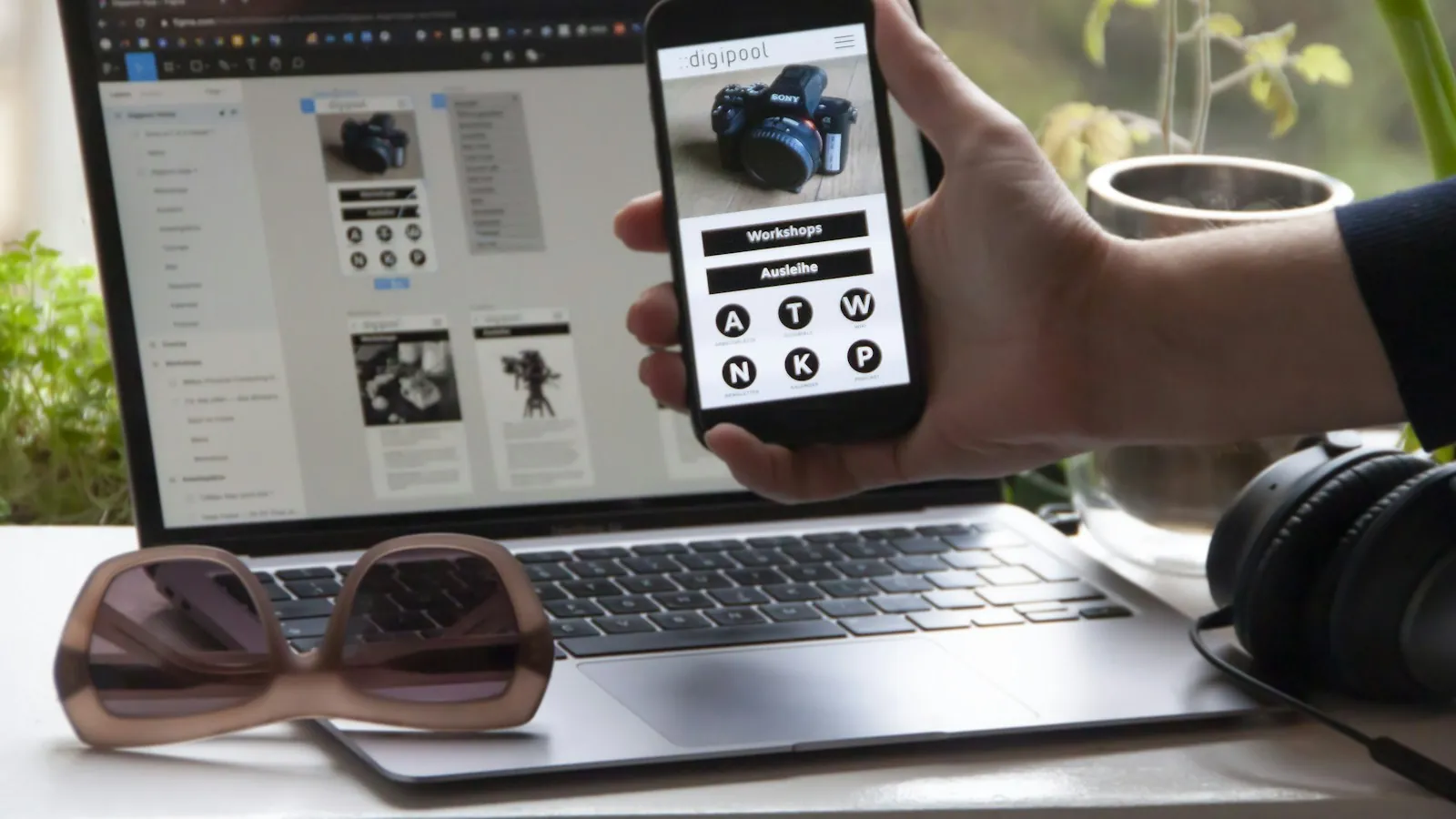
Person using the same app on a laptop and a smartphone
Home / UX/UI & Product Design / End-to-end product experiences
UX/UI & Product Design · End-to-end product experiences

End-to-end product experiences: one journey, every surface

Your users don't experience a website, an app, an email and an admin portal separately - they experience one company. I design the connected journey across all of them, so it feels like one coherent product.

Multi-surface journeysService blueprintsCross-role workflowsConsistent patterns

Why "end to end" matters

Products grow in pieces. A web app, then a mobile app, then a customer portal, then an admin console, then email notifications, then an integration with someone else's system. Each piece is designed by the team that owned it at the time, and each makes sense on its own. The user, though, moves across all of them in a single task - and that is where experiences break.

A provider starts a credential application on their phone, gets an email asking for a missing document, uploads it on a laptop, and later sees a status in a portal that uses a different word from the email. A buyer evaluates an AI tool in a trial, reads documentation, talks to sales and signs a contract through procurement - and meets four different visual languages along the way. These seams are where trust leaks away.

End-to-end design treats the whole journey as the unit of design: every surface, every role and every handoff.

Is this you?

Signs you need end-to-end design

01

Different words for the same thing

Status, object and action names differ between app, email and portal.

02

Mobile is an afterthought

Key tasks can't be completed on the device people actually have with them.

03

Admin tools are neglected

The customer app is polished; the staff console is a spreadsheet with buttons.

04

Notifications don't match the product

Emails and alerts link to the wrong place or describe states differently.

05

Handoffs between teams are invisible

Customers and staff can't see where something is in a multi-step process.

06

Every team has its own patterns

Separate products, separate design decisions.

What gets mapped

LayerExamplesWhat we look for
User-facing surfacesWebsite, web app, mobile app, portalsConsistent patterns, language and continuity of tasks
CommunicationsEmail, SMS, push notifications, in-app messagesTiming, wording, deep links, status alignment
Internal toolsAdmin consoles, review queues, support toolsWhether staff can see and act on what customers see
Systems and dataIntegrations, sync, single source of truthWhere data is duplicated, delayed or re-entered
People and rolesCustomers, coordinators, reviewers, approvers, supportHandoffs, ownership and visibility

Service blueprints: seeing the whole system

For complex journeys, I use a service blueprint: a diagram that lines up what the user does, what they see on each surface, what staff do behind the scenes, and what systems do - step by step. It makes the invisible parts of a journey visible, and it is usually where the biggest opportunities are found: a manual step that could be automated, a status nobody updates, a handoff with no owner.

On a healthcare credentialing platform, the redesign treated credentialing, provider portals and internal operations tools as one connected journey sharing the same data and patterns, rather than separate projects. That is what reduced the administrative burden - see UX design for credentialing workflows.

Consistency across surfaces

A connected experience relies on shared foundations:

  • One vocabulary - the same names for objects, actions and states everywhere.
  • One status model - identical meaning and treatment in the app, portal, email and admin console.
  • One design system - components and patterns reused across web, mobile and internal tools.
  • Continuity - start on one device, continue on another, without losing progress.
  • Deep links that work - every notification takes people straight to the right place.

Consistency also matters commercially. Enterprise buyers read inconsistency as immaturity - procurement is a decision-maker in 53% of B2B buying cycles, and evaluators see your product, documentation and communications side by side. See why enterprise evaluators abandon AI SaaS evaluations.

The process

How I design end-to-end experiences

  1. 01

    Choose the journeys

    The few end-to-end journeys that matter most to users and the business.

  2. 02

    Map the current state

    Every surface, role, message and system step, with pain points.

  3. 03

    Blueprint

    Line up user actions, surfaces, staff actions and systems to find the seams.

  4. 04

    Design the future journey

    Shared vocabulary, status model and patterns across all surfaces.

  5. 05

    Prototype key moments

    Especially the handoffs between surfaces and roles.

  6. 06

    Roll out in slices

    Improve the journey in releasable stages, measuring as you go.

What you get

01

Journey maps

Current and future end-to-end journeys for key tasks.

02

Service blueprint

Front-stage and back-stage steps aligned.

03

Vocabulary and status model

Shared language across every surface.

04

Cross-surface designs

Key screens for web, mobile, portal, email and admin.

05

Pattern library additions

Components needed to keep surfaces consistent.

06

Phased roadmap

Releasable improvements in priority order.

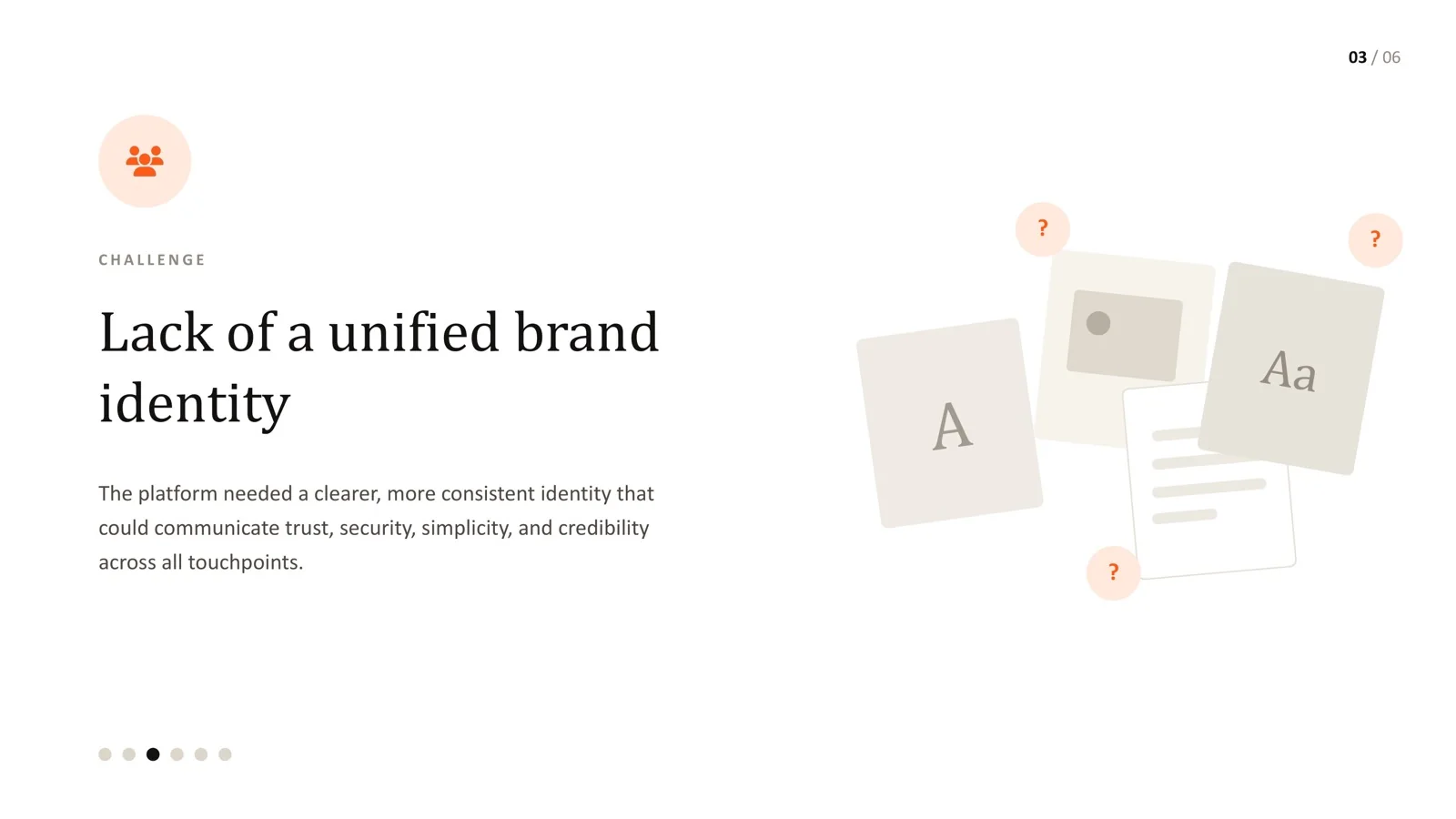
Healthcare credentialing platform lacking a unified identity before the redesign
From the work

Credentialing, portals and ops tools as one journey

A healthcare platform's credentialing workflows, provider portals and internal operations tools had grown separately - with scattered records and no single source of truth.

  • End-to-end workflows designed from information architecture to interaction design.
  • Shared patterns and data across every surface.
  • A consistent identity across product, website and marketing material.
Read the healthcare case study →

Frequently asked questions

Is this the same as customer experience (CX) design?

It overlaps. End-to-end product experience focuses on the digital journey - products, portals, communications and internal tools - rather than every customer touchpoint such as call centres or physical spaces.

Do we need to redesign everything at once?

No. The journey map and blueprint show where the biggest gaps are; improvements roll out in stages, starting with the highest-impact seams.

How do internal tools fit in?

They are often where customer problems originate. If staff can't see what customers see, status and handoffs break. Including internal tools is usually high-value.

Can this work across different technology stacks?

Yes. A shared vocabulary, status model and design system can be applied across platforms and vendors, even if the underlying technology differs.

Who should own the end-to-end journey?

Ideally a named product or experience owner with authority across teams. Without one, seams between teams persist.

Sources

Every statistic in this page links to its original publisher. Figures were checked against these sources on September 29, 2026.

  1. The State Of Business Buying, 2026 - Forrester, 2026
Let's solve something

Product feel like several products stitched together?

Let's map the whole journey and design it as one. Book a 30-minute call.

Book a 30-min call ↗