Choosing the right fidelity
Fidelity should match the question you are trying to answer. Too little and users can't react meaningfully; too much and people argue about colours when you wanted to test structure.
| Fidelity | Looks like | Best for answering | Speed |
|---|
| Sketches | Rough drawings, often on paper or a whiteboard | "What are the possible approaches?" | Minutes |
|---|
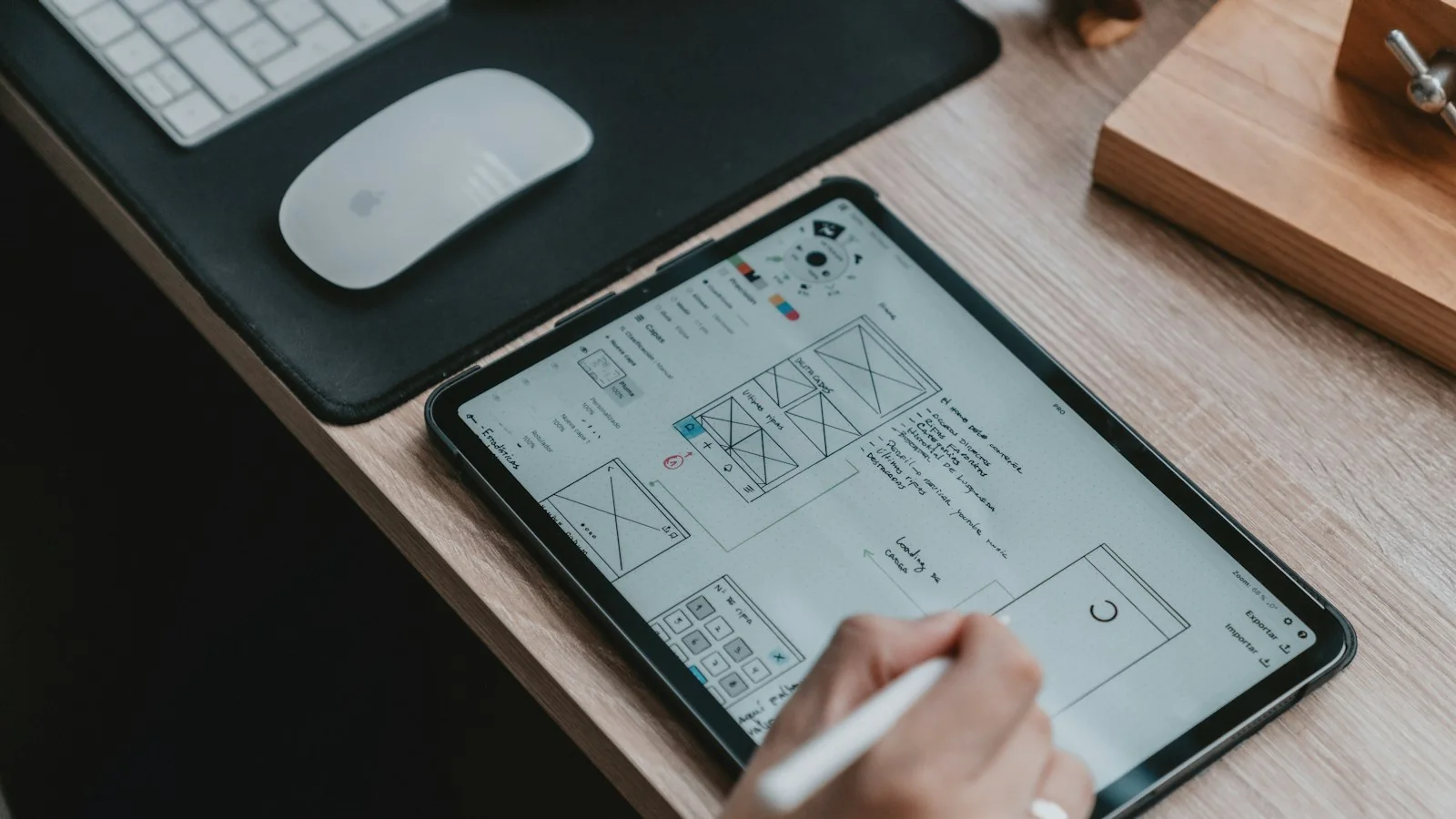
| Low-fidelity wireframes | Grey boxes, real labels, no styling | "Does the structure and content order make sense?" | Hours |
|---|
| Mid-fidelity clickable wireframes | Linked screens with basic interaction | "Can users complete the task?" | A day or two |
|---|
| High-fidelity prototypes | Real styling, realistic data, key interactions | "Will this work and feel right in production?" | Days |
|---|
| Coded prototypes | Built in code for complex interactions or data | "Does this interaction or performance hold up?" | Longer; used sparingly |
|---|
Wireframes are not the handoff
Wireframes are for agreeing structure. They are not enough to build from. A wireframe says where things go; it does not say how spacing, colour, typography or component states should look - which is exactly where inconsistency creeps in during implementation. On a large B2B catalog project, the handoff was a small set of high-fidelity templates, not wireframes, precisely so that new products could be added consistently later. See design systems at catalog scale.
Testing prototypes with users
A prototype is only as useful as the test it supports. For each round I:
- Define what we need to learn - two or three specific questions.
- Recruit representative users - roughly five per round for each significantly different user type.
- Write realistic tasks - "Find a combi oven that fits a 900mm space", not "Explore the menu".
- Observe, don't lead - users think aloud; we note where they hesitate or go wrong.
- Synthesise quickly - findings the same week, with changes made before the next round.
Remote moderated sessions work well for most B2B and SaaS products, and let you test with users in other cities or countries.